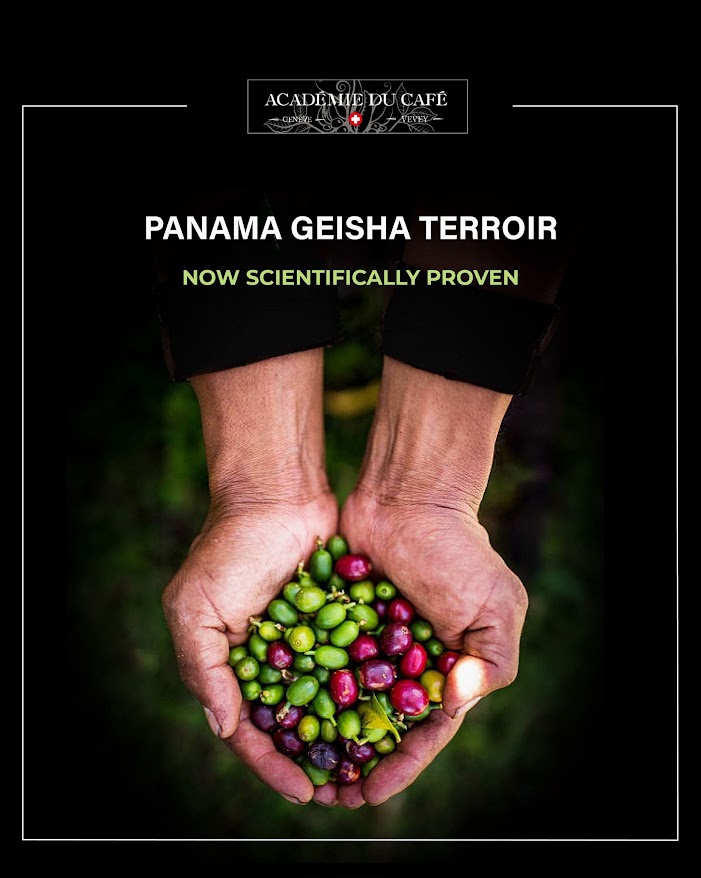
Panama’s coffee terroir is no longer just a story. It’s becoming science. 🌋☕
For years, Boquete has been described in poetic terms — volcanic soils, mountain mists, the bajareque, the flanks of Barú. Beautiful narrative. But is it actually science?
In 2025, we got a serious answer.
A study published in Food Science & Nutrition (Ledezma et al., 2025) tested washed Geisha from four Panamanian zones — Boquete, Renacimiento, Tierras Altas, Potrerillos Arriba — same harvest, same roast, same brew. A screened consumer panel evaluated them using the RATA method with discriminant analysis.
The result?
Boquete, Renacimiento and Tierras Altas are statistically distinguishable at 95% confidence — on aroma, flavor and taste.
Same variety. Same process. Different cup. That’s terroir — proven.
What’s fascinating: physicochemical parameters alone didn’t drive the differences. The signal came entirely from sensory attributes. Panama Geisha terroir is aromatic and flavor-driven, not a matter of pH or density.
And Panama isn’t stopping there.
The Technological University of Panama, funded by SENACYT, is now building a chemical fingerprint of Chiriquí coffee aromas using GC-MS — to protect designations of origin and help producers optimize fermentation, drying and roasting based on their specific terroir signature.
Wine has had appellation science for decades. Coffee is just beginning to build its equivalent.
For Q Graders, buyers and sensory scientists — this is a pivotal moment. The molecular evidence for what our palates long suspected is finally being built at origin. 🔬
Which production zone has surprised you the most — terroir-wise? 👇
Ledezma et al. (2025) — DOI: 10.1002/fsn3.71278