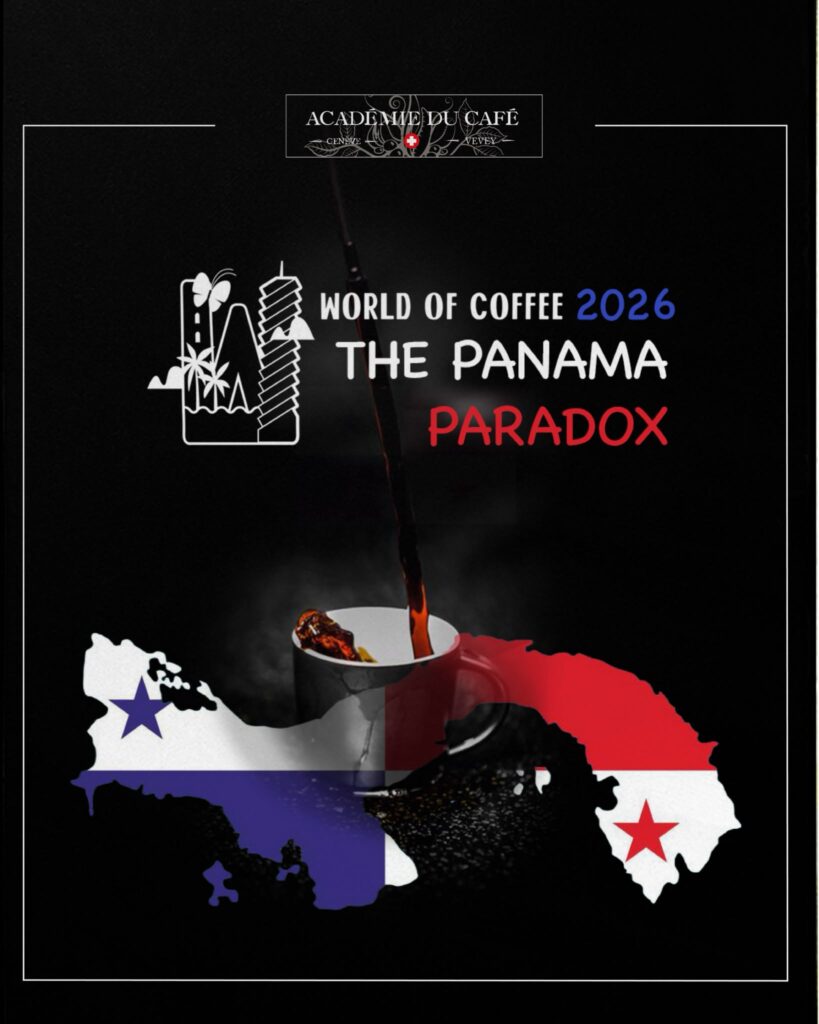
WBC 2026, the Panama Paradox
Panama grows 0.04% of the world’s coffee. At the World Barista Championship in Panama City, it supplied 51% of the coffees served in Round 1: 89 of 175.
What the data shows:
• 31 of the 49 competitors served a Panamanian Geisha. 41 served a Geisha of any origin.
• Brazil grows 35% of the world’s coffee and supplied 3 of the 175. Vietnam and Uganda, a fifth of world output, supplied none.
• Colombia was the exception among the big producers: 7% of world output, 23% of the coffees, and the top origin in milk drinks.
• The most-used farms: Jamison Savage’s Finca Deborah and Iris Estate (8 competitors), the Lamastus family’s Elida and Lamastus estates (7), Finca Las Flores in Colombia (5), Altieri and Hacienda La Esmeralda (3 each).
• All six finalists served Panamanian coffee in the final. The top two, Pan Wei (China) and Shing Win (Malaysia), used washed Geisha from the same farm, Finca El Pergamino.
• 56% of the coffees came with a fermentation step described on stage: anaerobic, yeast, koji, carbonic maceration.
• 13 of the 16 semi-finalists used Panamanian Geisha in Round 1, against 18 of the other 33 competitors.
• Finals since 2021: Australia 6 of 6, with two titles; the USA, Canada and Japan 3 each; China, Malaysia, Denmark and Ireland 2 each. In 2026, 4 of the 6 finalists came from Asia-Pacific and none from Europe.
Correlation is not causation. But half the coffees on the world’s biggest barista stage came from a country that grows 0.04% of the world’s coffee.
Is this the best of coffee, or a narrowing of it? Tell me in the comments.
Sources: official WCC rankings and broadcasts, USDA FAS 2025/26.
#enniocantergiani #academieducafe #WBC2026 #WorldBaristaChampionship #PanamaGeisha specialtycoffee coffeescience